
A strong product roadmap answers a simple question: what should a mobile company build next, and why? At Activity Monitor, the long-term direction is shaped less by feature volume and more by whether a decision helps families monitor meaningful online activity with clearer context, less friction, and more responsible controls.
That distinction matters. Many apps grow by adding options until the product becomes crowded and hard to trust. A better approach is to treat the roadmap as a sequence of trade-offs. For a company working in the online tracker and parental visibility space, every release has to map back to an actual need: understanding routines, reducing uncertainty, and making information easier to interpret across different devices and family situations.
What a roadmap means in this category
In consumer mobile apps, a roadmap is often confused with a release calendar. In practice, it is a long-range operating model. It defines which user problems deserve continued investment, which ideas should wait, and which requests may be popular but do not improve outcomes.
For Activity Monitor, that means product planning starts with recurring family questions rather than isolated feature requests. Examples include: Is a child’s online pattern changing suddenly? Does a parent need a clearer view of timing, not just raw notifications? Should a tracker present more detail, or would that add noise? These are product questions before they become engineering tasks.
This is also why roadmap work in this sector looks different from general entertainment or utility apps. The goal is not session growth for its own sake. The goal is practical visibility. A useful monitor should help users understand activity patterns quickly and then step away, not encourage endless checking.
The long-term direction: clarity over complexity
The most durable direction for Activity Monitor is straightforward: build apps that turn fragmented online signals into understandable patterns for families. That sounds simple, but it leads to a very specific set of product choices.
First, the company has to prioritize signal quality over feature count. If a feature makes the interface heavier but does not improve interpretation, it probably does not belong on the near-term roadmap. Second, cross-device reality matters. Families do not all use the same hardware. Some households are managing an iPhone 11, others an iPhone 14, iPhone 14 Plus, or iPhone 14 Pro, and network conditions differ across carriers such as TMobile. A roadmap in this space has to account for mobile variability, not assume one ideal setup.
Third, parental tools need to become more explanatory, not merely more data-heavy. A parental tracker that shows timestamps without enough context may create confusion. One that organizes patterns, exceptions, and changes over time is usually more useful. That principle influences everything from alert design to dashboard hierarchy.
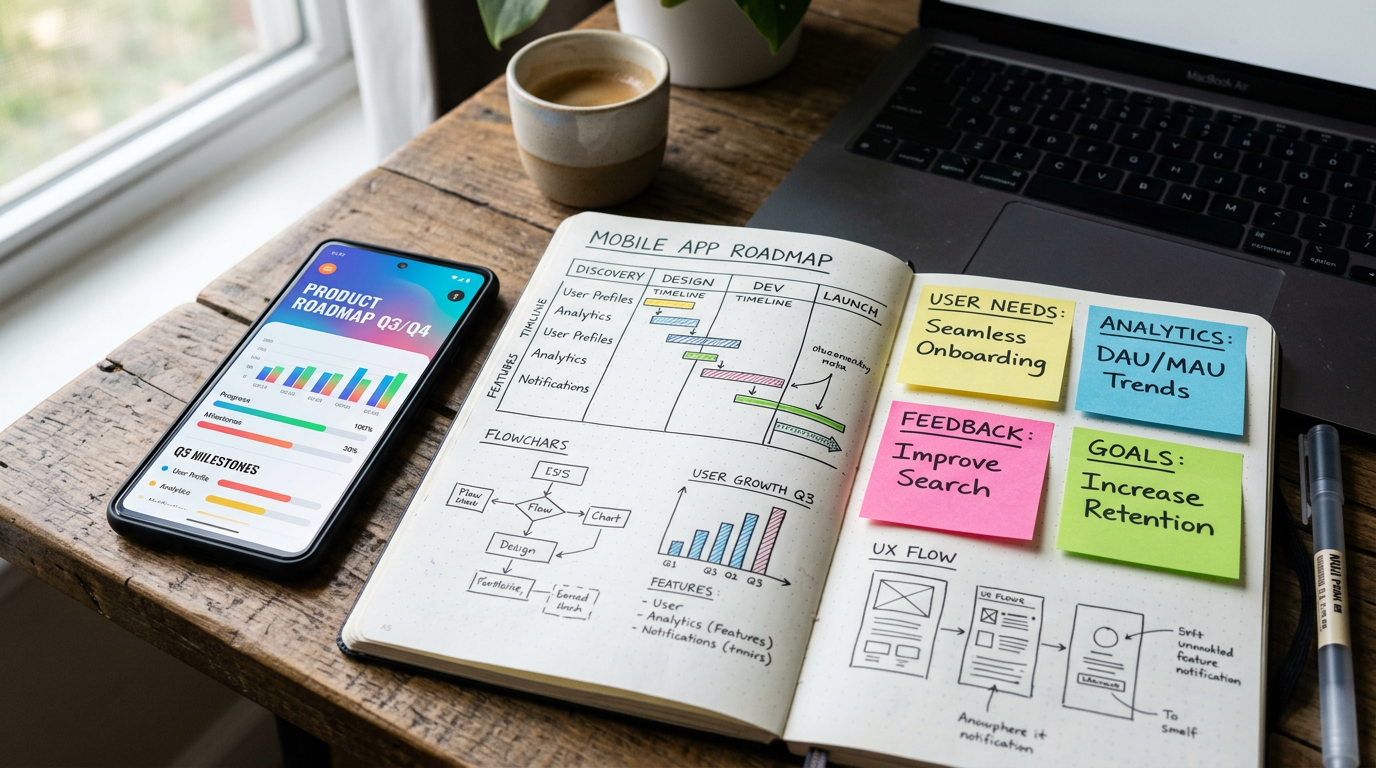
How product decisions map to user needs
Roadmap decisions become clearer when user needs are grouped by job to be done rather than by app screen. In this category, several needs appear repeatedly.
Need 1: Quick reassurance. Some users want a fast answer, not a deep report. They open an app to confirm whether an online routine looks normal. For them, the product should reduce effort. Surface the most important pattern first. Keep the path short.
Need 2: Pattern recognition. Other users are less interested in one moment and more interested in change over time. They need trend views, comparisons, and summaries that help them monitor shifts in activity without manually reconstructing the day.
Need 3: Household flexibility. Not every family has the same threshold for notifications, schedule sensitivity, or reporting detail. A good roadmap leaves room for configuration without turning setup into a burden.
Need 4: Confidence in interpretation. Data without explanation can lead to overreaction. Product decisions should therefore improve readability, labeling, and event context so that users understand what they are seeing.
These needs can guide prioritization better than a simple list of requested additions. If two candidate features compete for resources, the better choice is usually the one that improves one of these four jobs for more users with less complexity.
Where the current app portfolio fits
Activity Monitor’s apps include Luna - Parental Online Tracker, Seen Last Online Tracker, and SUNA. The long-term product vision is not about making each app do everything. It is about using each app to solve a distinct use case while sharing a common philosophy: clearer activity visibility, practical monitoring, and interfaces that respect real-world family usage.
Luna naturally aligns with parental use cases where routine awareness and family oversight are central. In roadmap terms, that means continued focus on clarity, exception detection, and presentation choices that help parents interpret changes without getting buried in detail.
Seen Last Online Tracker fits scenarios where timing visibility matters most. In a roadmap discussion, products like this should become better at distinguishing between raw event capture and meaningful timeline understanding.
SUNA can support adjacent needs depending on how users organize their digital monitoring habits. The strategic point is that a product portfolio should include focused apps, not one oversized app trying to serve every edge case poorly.
That kind of portfolio logic is usually healthier for both users and the company. It allows each app to remain understandable while still benefiting from shared learning across the broader product line. Readers who want background on the company’s overall approach can see Activity Monitor’s app company overview.
What should move up the roadmap, and what should wait?
A roadmap becomes credible when it explains not only what gets built, but also what gets deferred. In this category, a practical decision framework can be surprisingly simple.
- Does the feature improve understanding? If it adds data but not clarity, it should probably wait.
- Does it work well on common mobile conditions? A feature that performs nicely only on ideal hardware or networks is risky for mainstream users.
- Does it reduce repeated user effort? Good product work often removes taps, interpretation burden, or setup confusion.
- Does it fit the product’s role? Not every useful idea belongs in every app.
- Can it be explained simply? If the value proposition is hard to communicate, users may not trust or adopt it.
This is one reason a feature-rich roadmap can still be weak. Shipping more does not automatically create a better monitor. In many cases, the harder and more valuable work is refining how information is organized and when it is shown.
Three tensions every online tracker company has to manage
Long-term product direction in this sector is rarely linear. The work is shaped by a few recurring tensions.
Depth versus simplicity. Advanced users often ask for finer controls and richer views. Newer users want the app to feel obvious on first open. The right roadmap does not choose one side permanently; it stages complexity so that essential functions stay clear while advanced options remain available when needed.
Speed versus context. Immediate notifications can be useful, but speed without explanation often increases anxiety. A mature product balances timely updates with summaries and pattern framing.
Portfolio breadth versus product focus. A growing company can either pack more functions into one app or keep separate apps for separate jobs. In family visibility products, focus often wins because it keeps the experience legible.
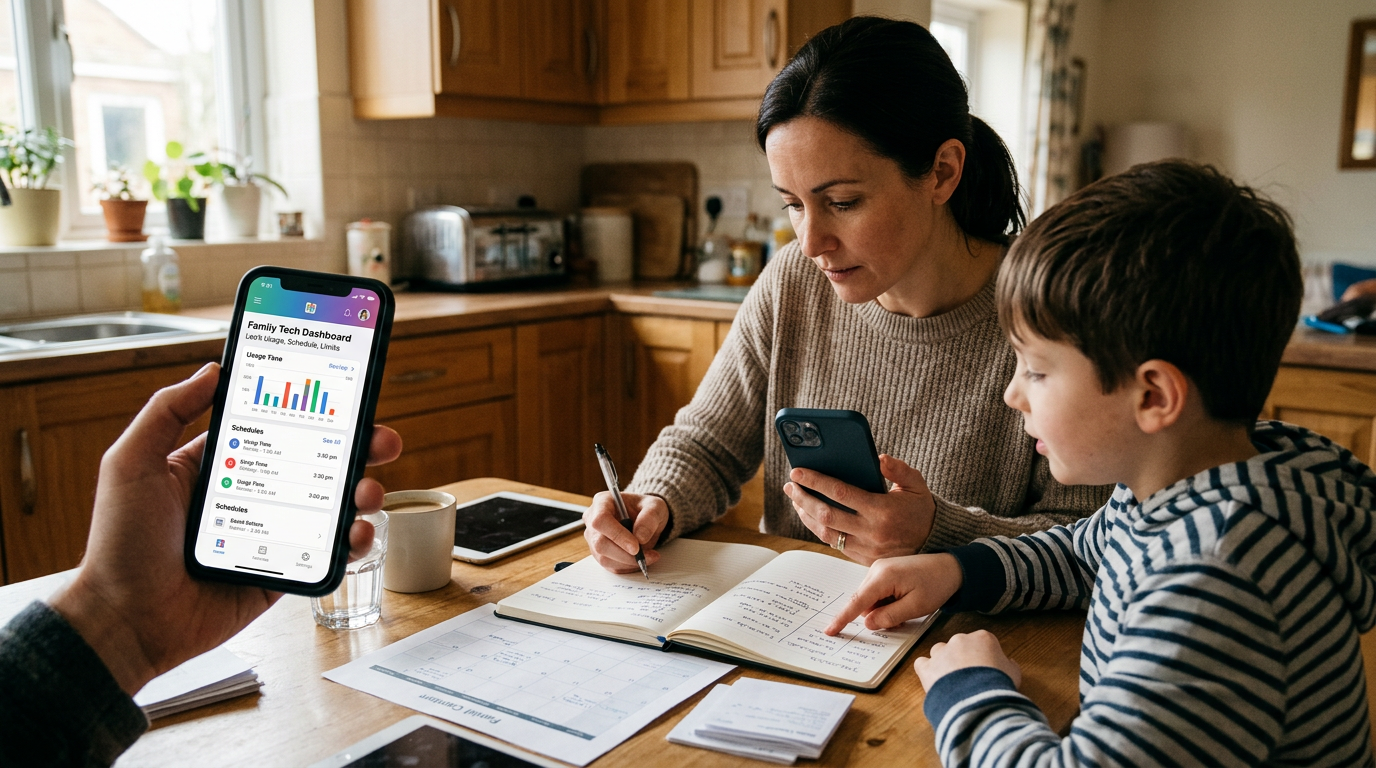
A practical scenario: how roadmap thinking changes one feature discussion
Consider a common internal debate. Users ask for more granular online logs. At first glance, the request appears straightforward: add more detail. But roadmap thinking asks a different set of questions.
Will more granularity help most users interpret behavior better, or will it make the interface harder to scan? Does the added detail belong in the main view, or should it sit behind an optional layer for users who need it? Will this feature matter equally for parental users and non-parental users? Can it function reliably across older and newer mobile devices?
Sometimes the right answer is not “build it” or “reject it.” It is “reframe it.” Instead of exposing more raw logs by default, the product may benefit more from a clearer daily summary with optional drill-down. That kind of choice reflects a roadmap guided by user outcomes rather than request volume.
Questions users often have about product direction
Why not combine every feature into one app?
Because different monitoring jobs require different levels of focus. A single app can become harder to navigate, harder to maintain, and less clear for the user.
Why do some improvements look small from the outside?
Because interface clarity, notification logic, and data presentation often produce more value than visibly large feature launches. Small changes can materially improve how people monitor activity.
Why does cross-device support matter so much?
Because a family product has to work in ordinary conditions, not just on the newest phone. Compatibility across devices such as iPhone 11 and iPhone 14 models is part of product usefulness, not an afterthought.
What makes a parental tracker genuinely helpful?
It should reduce ambiguity, not amplify it. The best tools help users understand routines and changes without forcing them to interpret every data point manually.
What this vision means for the next phase
The next phase for Activity Monitor should not be defined by the broadest possible app footprint. It should be defined by sharper fit between user intent and product behavior. That means stronger summaries, better pattern explanation, thoughtful alerting, and careful separation between focused apps where that separation improves usability.
It also means staying disciplined about what not to build. Product teams in the mobile apps market can be tempted to chase novelty, especially when a feature sounds impressive in isolation. But in monitoring products, trust is built through consistency, readability, and steady performance. Those are quieter decisions, yet they are often the ones that matter most over time.
That is the real roadmap story: not a promise to ship everything, but a framework for choosing what deserves to exist. For a company in the activity monitor space, long-term success comes from understanding that families are not asking for endless data. They are asking for better judgment, delivered through software.