
Activity Monitor: A Mobile App Company Focused on Practical Family Visibility
Activity Monitor is a mobile company built around a straightforward idea: people need better ways to understand digital habits that affect family communication, supervision, and peace of mind. Rather than treating connectivity as background noise, the company develops apps that help users monitor meaningful patterns of activity in a more organized way.
Activity Monitor’s portfolio includes Luna - Parental Online Tracker and SUNA. Both focus on making visible online-presence signals easier to review. A report has platform and visibility limits and should not be treated as a complete record of someone’s activity. Review Luna - Parental Online Tracker for current product details and supported features. Review SUNA for current product details and supported features.
This is not a category built for novelty. It exists because digital communication has changed how families interpret availability, routines, and responsiveness. A parent may wonder whether a child is staying up late, whether a family member is keeping a regular schedule, or whether certain usage patterns suggest a need for a conversation. In those situations, an online tracker is not about abstract data. It is about context, timing, and informed judgment.
The mission behind Activity Monitor
At its core, Activity Monitor works on a simple mission: to make observable digital behavior easier to understand for everyday users. That mission sounds narrow at first, but it addresses a surprisingly common problem. Most people can see isolated status changes or recent usage signals in messaging platforms, yet very few have an efficient way to interpret those signals over time.
The company focuses on turning scattered visibility into usable understanding. That means helping users answer questions such as:
- Is this pattern occasional, or is it becoming routine?
- Are certain hours consistently more active than expected?
- Is there a change in behavior compared with previous days or weeks?
- Does a visible usage pattern justify a check-in, a conversation, or a boundary review?
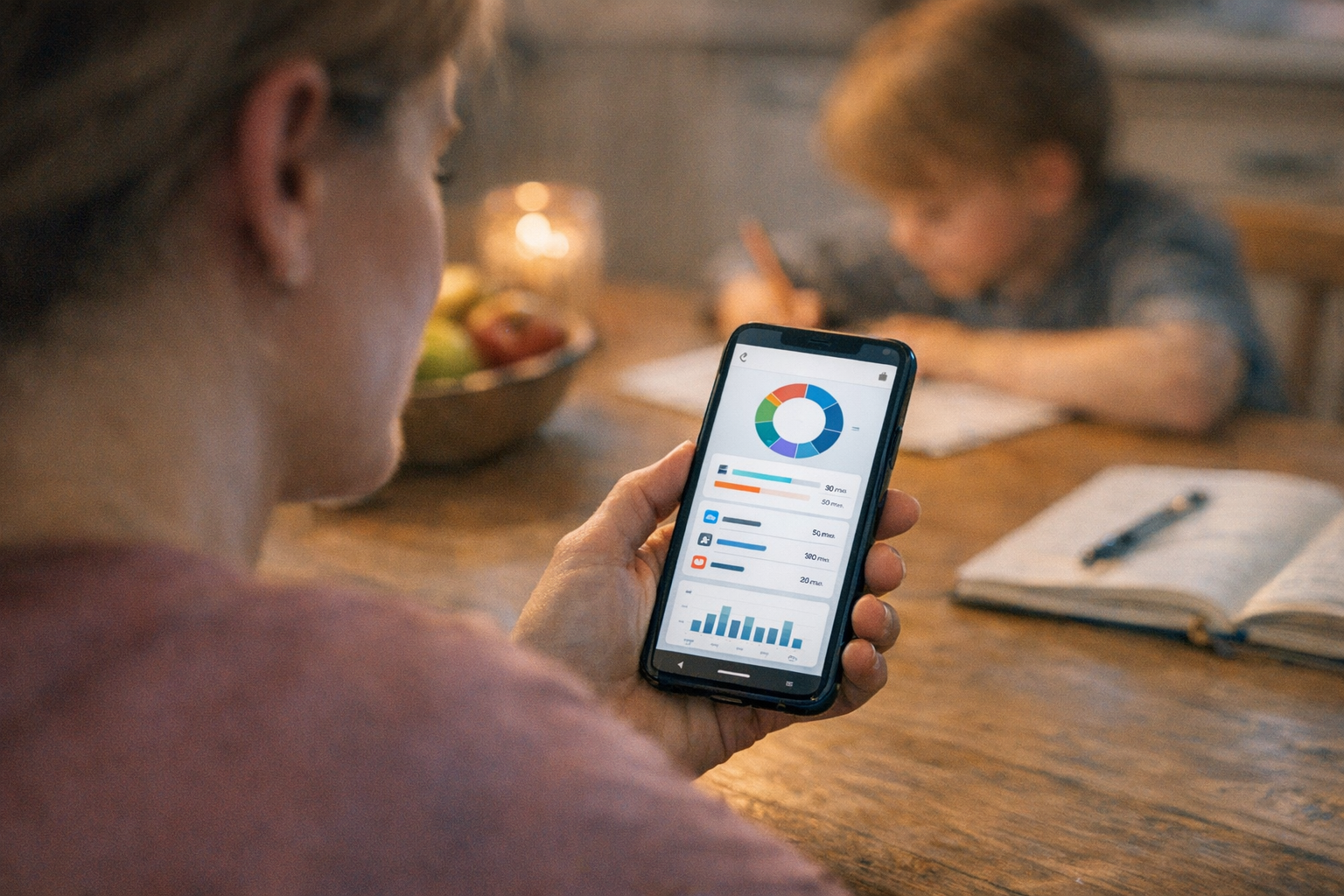
For parents, these questions are often practical rather than dramatic. The goal is not constant surveillance for its own sake. The goal is better awareness in situations where timing matters and assumptions can easily lead to conflict. A parental tracker can be useful when it supports calm decision-making instead of reactive monitoring.
That is where Activity Monitor positions itself. The company is not trying to be everything to everyone. It concentrates on a specific use case: helping families and individual users understand visible messaging-related behavior more clearly and consistently.
Why this problem matters
Many technology products are built around speed, entertainment, or broad utility. Activity Monitor addresses a different kind of need: clarity. Families often face small but repeated uncertainties around digital communication. A teenager says they were asleep. A family member appears unavailable for long stretches and then becomes active late at night. A parent wants to understand whether a pattern is random or established.
Without a dedicated monitor, users often fall into inefficient habits. They manually check status changes, keep mental notes, compare screenshots, or revisit the same app multiple times a day. That approach creates three problems.
- It is inconsistent. People rarely observe enough moments to identify an actual pattern.
- It increases stress. Repeated checking tends to create more anxiety, not less.
- It leads to poor conclusions. A single visible moment can be misleading when taken out of context.
Activity Monitor’s products are designed around the idea that organized data is more useful than repeated guessing. When users can review patterns instead of isolated moments, they are better positioned to respond reasonably.
Product philosophy: practical visibility over noise
Every software company makes choices about what to optimize for. Some prioritize feature volume. Others focus on visual novelty. Activity Monitor’s product philosophy appears to center on practical visibility: showing users the information that matters most, in a format they can actually use.
That philosophy has a few important implications.
1. The products should solve a narrow problem well
One of the easiest ways for a mobile app company to lose user trust is to promise broad control while delivering shallow usefulness. Activity Monitor takes a more disciplined route. Its apps include tools designed for understanding last seen behavior, session timing, and observable online presence patterns. That narrowness is a strength. It helps the products stay aligned with real user questions instead of drifting into unnecessary complexity.
2. The interface should reduce manual effort
A good tracker should not create more work than it removes. If users still need to watch screens constantly or keep handwritten notes to understand a pattern, the product is not doing enough. The value of a monitoring app comes from helping users review activity in a structured way rather than forcing them to reconstruct it later.
3. Information should support judgment, not replace it
Digital tools can show patterns, but they cannot determine family context on their own. Activity Monitor’s role is to make visible signals easier to interpret. The human part still matters. Parents, guardians, and family members must decide what a pattern means, when to ask questions, and how to respond appropriately.
4. Mobile usability matters because families check information in real life, not at a desk
This category is inherently mobile. Users are not analyzing behavior from a large workstation during office hours. They are checking updates between meetings, after school pickup, during evening routines, or while managing household logistics. That makes mobile-first design a practical requirement rather than a branding choice.
The products that define the company
Activity Monitor’s two portfolio offerings are Luna - Parental Online Tracker and SUNA. They share a focus on online-status awareness; SUNA is also named Seen Last Online Tracker and is not a third product in this list.
Luna - Parental Online Tracker
Luna is the clearest expression of the company’s family-focused direction. As a parental online tracker, it is built for guardians who want a more dependable view of visible messaging activity over time. The emphasis here is not only on observation, but on helping parents move from scattered checks to a more structured overview.
That matters in practical scenarios such as:
- reviewing whether late-night usage is occasional or frequent
- understanding if after-school hours are becoming unusually active
- spotting changes in routine that may warrant a conversation
- reducing the need to manually check status updates throughout the day
Users can also review SUNA’s current product information and supported online-status features. It is the same portfolio entry referred to as Seen Last Online Tracker.
SUNA
SUNA extends the company’s focus on organized family visibility. It supports users who want a lightweight but practical way to follow visible online routines and identify recurring timing patterns. As with the rest of the portfolio, the value comes from turning fragmented observations into a more coherent picture.
The user problems Activity Monitor is trying to solve
A useful company introduction should be honest about the real-world problems behind the product line. In Activity Monitor’s case, those problems are specific and easy to recognize.
Problem 1: Manual checking does not scale
Families often start by checking status changes manually. That may seem manageable at first, but it quickly becomes inefficient. People forget what they saw, miss key windows, or overreact to isolated moments. A dedicated activity monitor helps organize what would otherwise be incomplete observation.
Problem 2: One moment rarely tells the full story
A person being active at 11:45 p.m. one night may mean very little. The same pattern appearing across multiple nights means something different. Activity Monitor focuses on this gap between momentary visibility and pattern awareness. Its apps help users understand recurring behavior rather than isolated incidents.
Problem 3: Parents need context before starting difficult conversations
Family conversations go better when they begin with context instead of accusation. If a parent believes a child is online too late, it helps to know whether that concern reflects a real pattern. A parental tracker can support more grounded discussions by replacing vague suspicion with clearer observations.
Problem 4: Mobile families need simple tools, not heavy systems
Most households do not want enterprise-style dashboards or complicated setup flows. They want straightforward apps that help them understand what is happening and decide what to do next. Activity Monitor’s category works best when it remains accessible to ordinary users with ordinary time constraints.
How the company approaches trust and usability
For a company working in the monitoring space, trust is inseparable from product quality. Users rely on these tools because they are trying to reduce uncertainty. That means the experience has to feel reliable, clear, and proportionate to the problem being solved.
From a product standpoint, that usually means a few things matter more than flashy extras:
- clear presentation of visible activity patterns
- simple onboarding that does not overwhelm first-time users
- mobile performance that holds up across routine daily use
- features that support interpretation rather than distraction
A practical mobile company should test supported device generations, operating systems and everyday network conditions. Compatibility has limits and should be documented rather than implied by a list of popular handset or carrier names.
That kind of compatibility is often overlooked in company introductions, but it matters because family monitoring is only useful when the product works smoothly in ordinary life.
A focused place within a wider app ecosystem
Activity Monitor operates within a broader mobile software landscape where different companies solve adjacent family and communication problems. For users comparing tools across categories, it can be helpful to understand that this company’s strength is specialization. Its portfolio stays close to online presence monitoring and family visibility instead of branching into unrelated utilities.
Readers interested in adjacent family-safety categories may also find value in tools such as Find: Family Location Tracker, which addresses location awareness rather than messaging visibility. The distinction matters: location tracking and online activity tracking solve different problems, and users often choose between them based on the kind of context they need most.
What makes this company worth understanding
Activity Monitor is a specialized company, and that specialization is the point. It focuses on the practical side of digital visibility: helping users understand observable online routines without turning that process into a full-time task. Its products include family-oriented solutions such as Luna and SUNA, all built around a common belief that clearer pattern awareness leads to better decisions.
For families, that can mean less guesswork. For parents, it can mean more informed conversations. For everyday users, it can simply mean a better way to make sense of recurring activity that would otherwise be easy to misread.
That is the clearest way to understand Activity Monitor: not as a general-purpose app maker, but as a mobile company dedicated to a specific and increasingly relevant need—helping people interpret visible digital behavior with more structure, less friction, and better context.